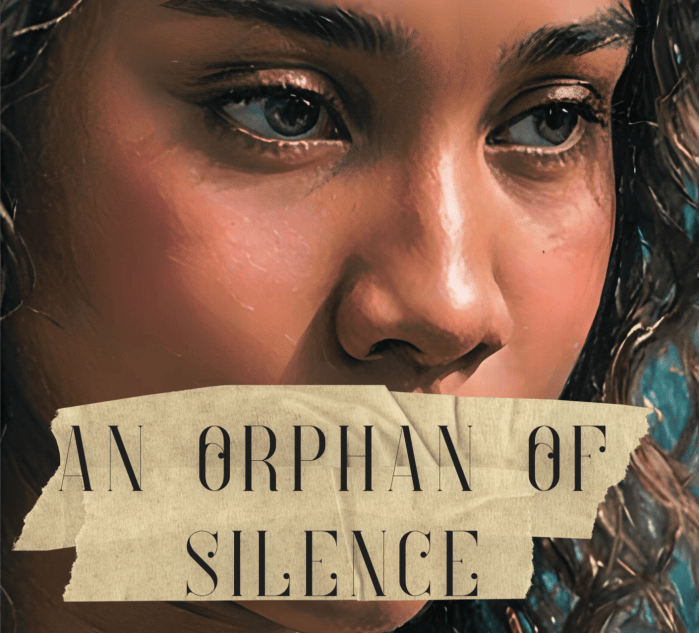
“The deepest feeling always shows itself in silence.” — Marianne Moore
My first cigarette of the day always tastes like cardboard. I inhale deeply, the familiar burn fills my lungs, I watch the sun climb over the early morning skyline.
With the time differences, I’d been awake for an hour now, as darkened hues turned to the shades of dawn.
The ashtray beside me was almost full, remnants of last night’s release.
The text would come soon. And with it, things would be different.
My coffee had long since gone cold, no matter, a fresh pot was already steaming inside.
My phone lights up. My lawyer. “Hey there, just letting you know, the divorce is now final. It’s done, congratulations.”
A wave of cold satisfaction washes over me. Done. I type a single word. “Ok.”
I sat silently, inhaling again to calm shaky hands.
I hear the glass door slide open. My nephew, a taller, lighter version of my sister-in-law with a mop of my brother’s hair tangling at all angles.
He steps out. “You’re up early.”
“The bins,” I say, my voice flat. “And your cousin if his room isn’t clean after breakfast, he loses his phone for the week. No warnings.”
My nephew nods.Light brown eyes above an aquiline nose, and the first signs of budding facial hair. He looked so much like his dead father at times, the pain always came back when he smiled.
He glances at the half cigarette on the ashtray. “Rough morning?”
“The past is just noisy today,” I smile weakly, stubbing it out.
As he goes inside, the ‘noise’ begins to press in.
It wasn’t the cacophony of a waking world, but something quieter, more deceptive.
Lost in thought, I could hear my father’s voice, a low, measured tone that could drain the warmth from a room. He’d never been a kind man, and for the tragedy that took both him and his eldest son, I missed one of them more, the other could burn for all I cared.
My father was a man who believed the world operated on a system of flawless logic, a system he alone understood.
He’d treated our home as an extension of his classroom, a place for quiet order and constant, quiet assessment. His disapproval was never shouted; it was calibrated.
I remembered my early teens, and a test score of 98%, I’d smiled, school hadn’t always been my forte, but he made love feel like something that had to be earned on a grading curve where I always fell just short.
I had stared at his silence, his favorite weapon; as he withdraw into his papers, and the message was clear: until I improved, I was not worth his time.
My mother existed within the small spaces my father’s presence left unoccupied.
She was a woman who had learned that harmony was preserved through stillness. Her voice was always a soft murmur; her movements deliberate and unobtrusive.
Her greatest lesson to me was one of diminishment. “Don’t disturb your father’s thinking,” she would say, gently steering me away. “It’s better if we are quiet.” She once told me, “A woman’s strength is in her patience. We keep the house steady so the men can think about important things.” She wasn’t weak; more a strategist for survival, and hers had been to make us both invisible. She’d taught me that our needs were secondary, our voices an inconvenience to the real work of the world done by men.
This was the cage they built for me: my father’s cold, intellectual judgment and my mother’s philosophy of quiet self-erasure.
It created a deep fracture.
A chasm my first husband understood and exploited. He was nothing like my father, but he offered brutal, physical simplicity to the complex problem of my worth. The violence was something I could at least understand, a pain I could locate on a map of my body.
And it’s what made my second husband so dangerously appealing. He was from my father’s world—educated, articulate—but he offered what felt like intellectual companionship.
But even then, past the honeymoon and fancy trips, it eventually curdled into a more familiar manipulation. “You’re overreacting, your perspective is clouded, that isn’t what I meant” he’d say, twisting my father’s language of cold assessment into a tool for gaslighting. He made me doubt my own mind.
It had stung at times when he’d look at my then-infant son, and almost sarcastically say “ours would be better”. I’d fallen back in on myself, struggling to find the resolve to move on.
But I loved him, I’d loved them both. And now, instead of “I love you” there were a litany of Fs in sentences I’d deliver for them both.
It had taken me years to get over my sense of worthlessness, and now, standing on my own balcony, I’ve begun to recreate what I’d wanted, redoing the architecture, renovating my life.
Both of their voices are a quiet hum now in the wiring. My sternness with the boys is a rebellion against my mother’s call for quiet.
My drive for success is a furious attempt to finally earn the top marks from a father who will never see it.
Admittedly, sometimes, programming fails. Last week, my son aced a test. He showed me, beaming. My first, unbidden thought was my father’s: What were the parameters of the test? Was it challenging enough?’
I’d seen the shadow of my reaction dim his smile before I could stop it. I had to turn away the guilt, a physical ache. Later, I cried in my office, not just for hurting him, but for the horrifying echo of my upbringing, still resonant enough to touch my son.
I sigh and stand to walk back inside. My son had come out of his room, wiping sleep off his eye. “Mum?” he says, hesitantly. “For my project… what was the hardest thing you ever had to do?”
I look at him, his face open and untouched by the kind of fear that shapes a life.
“The hardest thing”, I say, my voice low but clear, “was to learn that my thoughts were important, even when they were quiet. And that my voice had a right to take up space. Everything else was easy after that”.
He shrugs, nonplussed and turns on the tv for the morning cartoons.
I turn towards the kitchen before he sees the tears.
One day my child, you’ll understand, the world is not kind. The world will put you down. But you will never find yourself alone.
I feel at peace now, no longer that young girl, trying to find the love that was never mine.
I wipe the moisture from my eyes and begin pouring myself another cup of coffee.